
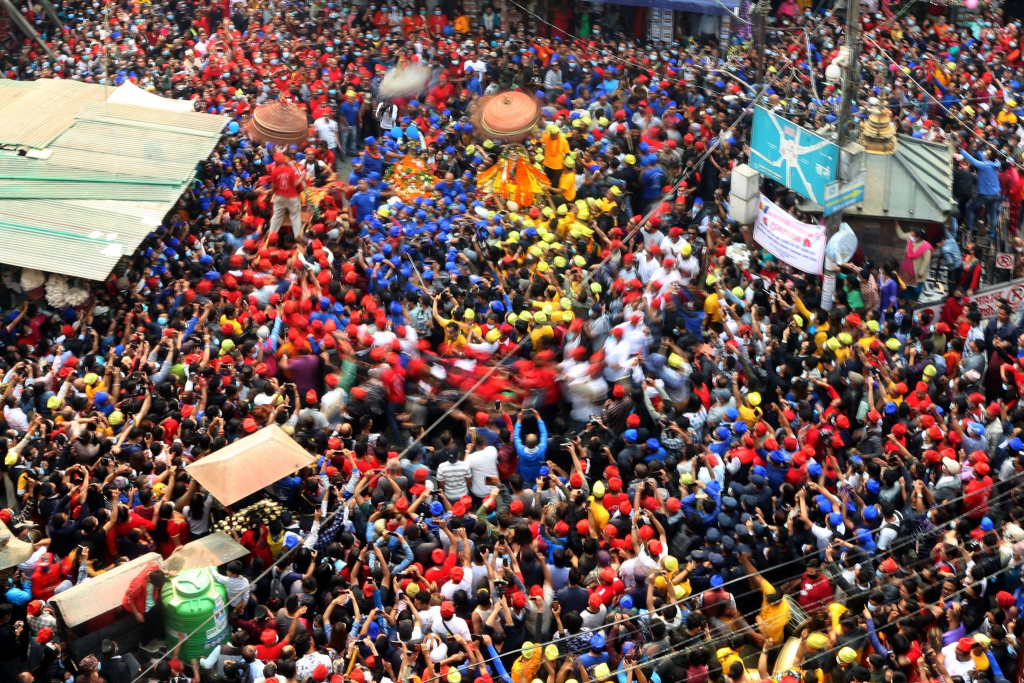
Pachare Jatra is a traditional Newari festival connected closely with Ghode Jatra in Kathmandu Valley. While Ghode Jatra is known for the horse parade at Tundikhel, Pachare is the more local, community-level celebration that happens around the same time.
The word “Pachare” comes from “pachāyegu,” which means “to drive away.” The main idea of this jatra is to chase away negative energy, bad spirits, and misfortune from the community.
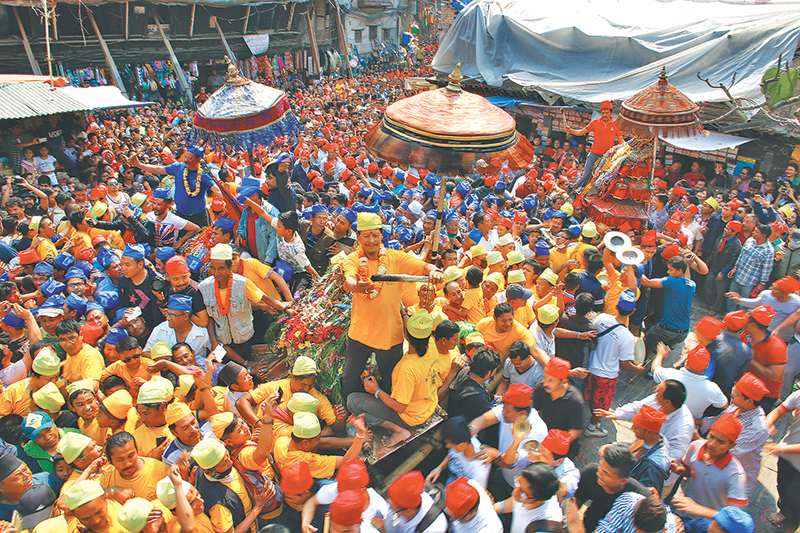
One of the most interesting parts of Pachare Jatra is the presence of groups wearing different colored dresses, mainly yellow, red, and blue. These groups are not random. Each color represents a role, identity, and connection to the tradition.
In many Newar communities, these groups move through the streets together during the jatra. They make sounds, perform small rituals, and symbolically “clear” the area. The different colors help identify each group and their responsibility during the procession.
What the Colors Represent
- Red is often linked with power, energy, and protection. It is a strong color in Newari culture and is commonly used in rituals.
- Yellow represents purity, peace, and spiritual balance. It is also connected with religious practices and offerings.
- Blue is seen as calm and protective, sometimes associated with deeper spiritual meaning and space.
Cultural Background
Pachare Jatra is rooted in old Newar beliefs about protecting the city and its people. According to local stories, it is linked to the same legend behind Ghode Jatra, where the spirit of a demon is kept under control. While the army performs horse rituals in Tundikhel, local communities carry out Pachare rituals in their own areas.
Different neighborhoods in Kathmandu, especially old Newar settlements, have their own way of celebrating it. There is no single fixed format, which makes it more personal and community-driven.
How Pachare Jatra is Celebrated
In many places, groups of people move through the streets with traditional music, noise, and symbolic actions meant to “clear” the area. Some communities carry torches, some make loud sounds, and others perform small rituals at crossroads or courtyards.
These activities are not random. Each step has a meaning tied to protection, cleansing, and keeping the surroundings safe for the coming year.
It usually happens in the evening or at night, which adds to the atmosphere. The focus is less on spectacle and more on belief and tradition.
Role of Community
What makes Pachare Jatra special is the involvement of local people. It is not organized by large institutions but by the community itself. Elders guide the rituals, and younger generations take part, learning by doing.
This is how the tradition continues without needing a formal structure.
Food and Gathering
Like every Newari festival, food is part of the experience. Families prepare simple but traditional items at home. Dishes like Samay Baji, Chhoila, Bara, and Aila are commonly enjoyed.
It is not about big feasts but about sharing food within the family and neighborhood.
Why Pachare Jatra Matters
Pachare Jatra may not be widely known outside the Newar community, but it plays an important role in preserving local culture. It keeps old beliefs alive and strengthens community bonds.
It is a reminder that not all festivals are about large crowds. Some are about small groups, shared rituals, and quiet traditions that have been followed for generations.