
Bisket Jatra – The New Year Festival of Bhaktapur
Bisket Jatra is one of the most intense and famous festivals in Nepal, celebrated mainly in Bhaktapur during the Nepali New Year. It marks the end of the old year and the start of a new one, but unlike other celebrations, this jatra is known for its energy, crowds, and strong traditions.
The Main Highlight – Chariot Pulling
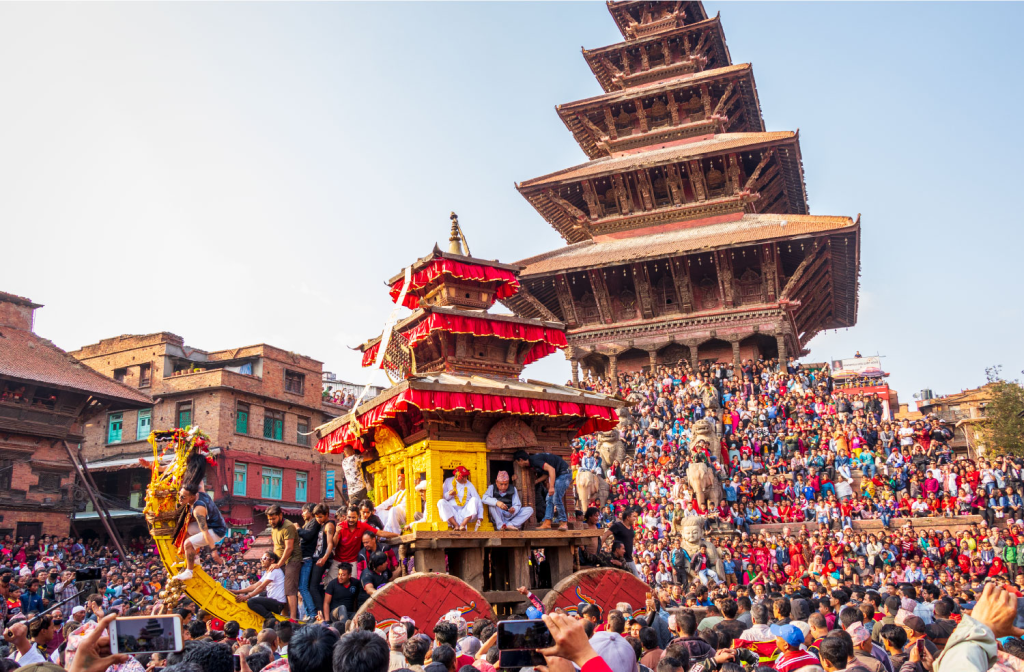
The biggest attraction of Bisket Jatra is the chariot of Bhairab and Bhadrakali. A large wooden chariot is pulled through the narrow streets of the city by groups of people.
What makes it unique is the tug-of-war between different sides of the city. Each group pulls the chariot in their direction, creating a powerful and competitive atmosphere. It’s loud, crowded, and full of excitement.
The Lingo (Pole) Tradition
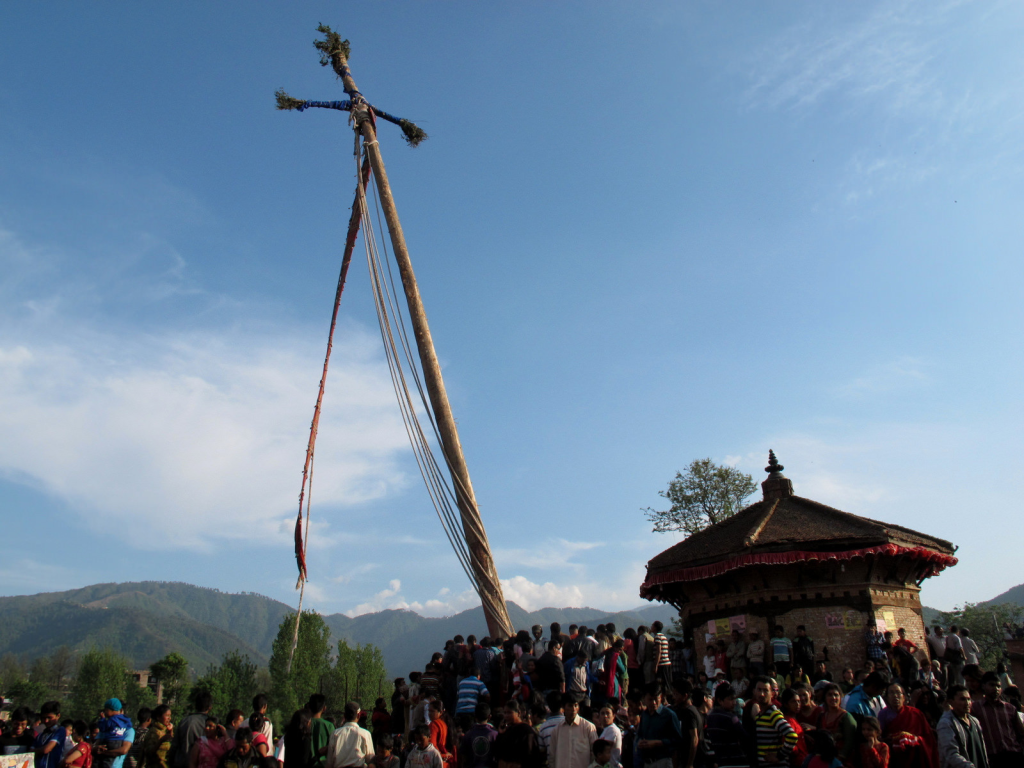
Another major part of Bisket Jatra is the raising of a tall wooden pole called “lingo” at Taumadhi Square. This pole has symbolic meaning connected to old legends and is raised with great effort.
At the end of the festival, the pole is pulled down, marking the completion of the jatra and the beginning of the new year.
Cultural Meaning
Bisket Jatra is believed to be linked with an old myth about a cursed princess and two serpents. The rituals and celebrations are said to represent the end of that curse and the protection of the city.
More than the story, it represents strength, unity, and the identity of the local people.
Food and Celebration
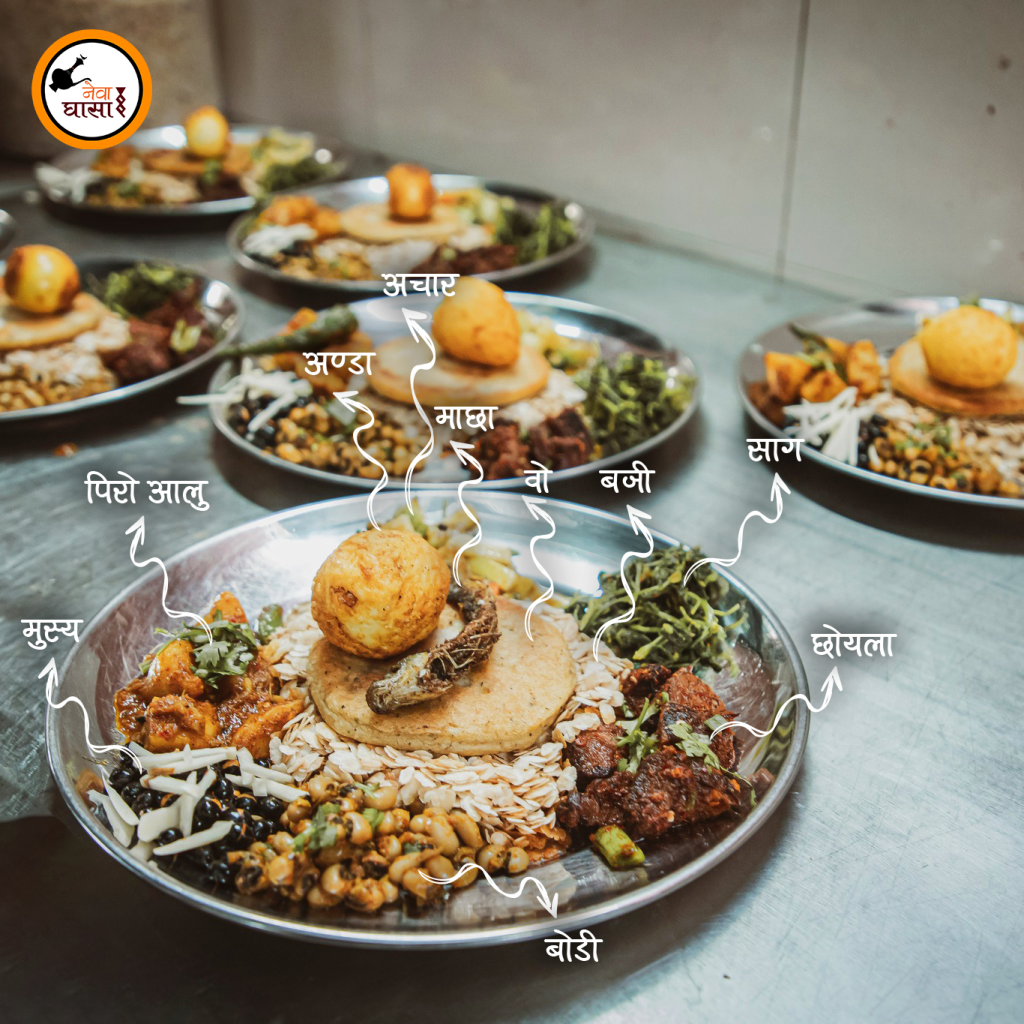
Like all Newari festivals, food plays a big role. Families prepare and enjoy traditional dishes like Samay Baji, Chhoila, Bara, and Aila during the celebration. It’s a time to gather, eat, and celebrate together.
Experience Bisket Jatra
If you want to see raw culture and real energy, Bisket Jatra is one of the best festivals to witness in Nepal. It’s not calm or quiet; it’s intense, traditional, and deeply rooted in local life.